
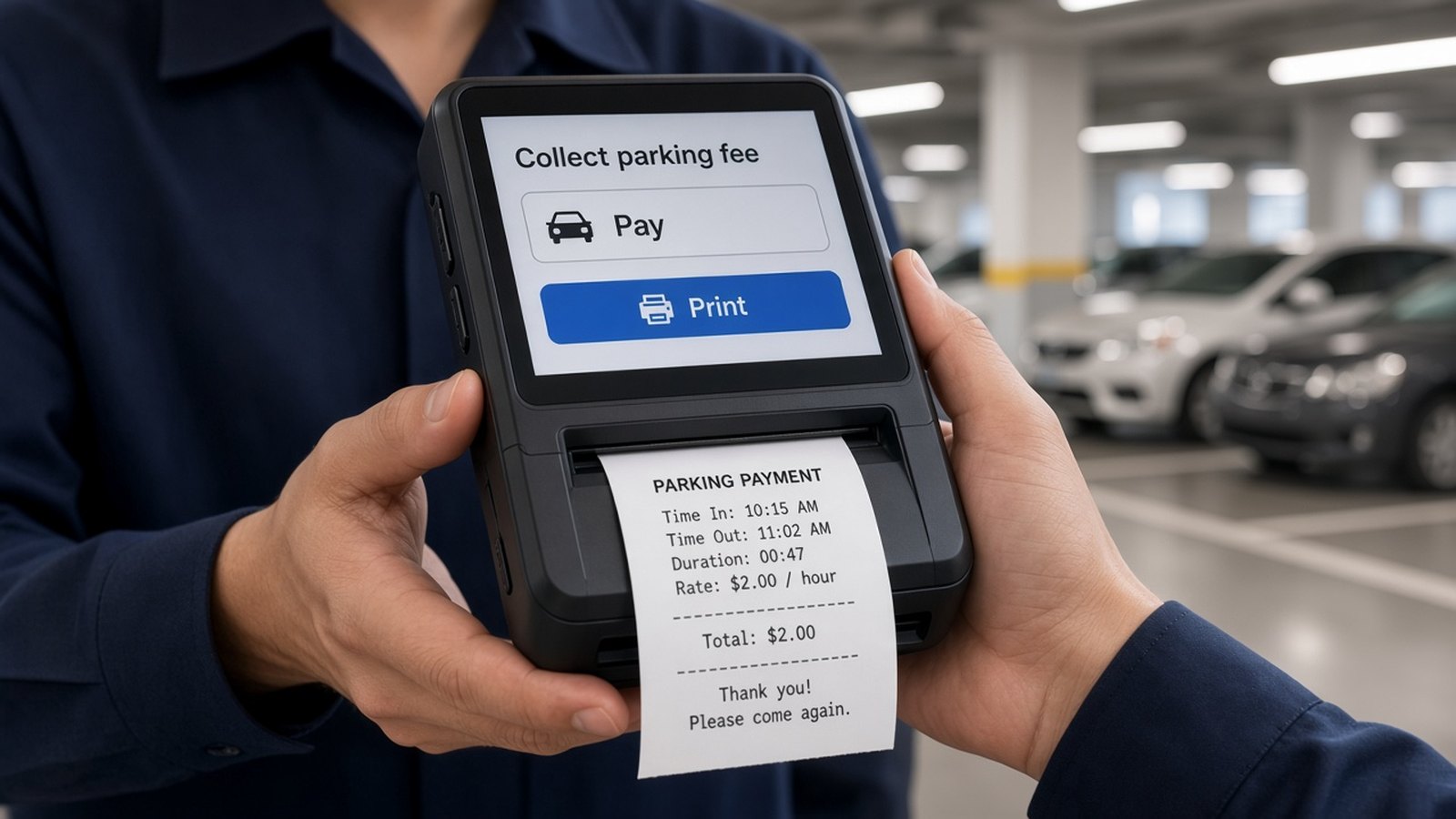
Parking payment automation means the fee is calculated from configured rules and collected through a supported channel, with a transaction stored against the parking stay.
That is different from a cashier estimating a charge at the booth. Automated collection still needs people for exceptions, refunds, and disputed stays. The gain is consistency: the same tariff is applied, and the same record can be reviewed later.
Tariffs come first
Before choosing a payment terminal, operators should write down the actual commercial rules: grace periods, hourly rates, daily caps, validations, staff exemptions, lost-ticket policies, and overnight charges. Software can only automate a rule that has been defined.
Collection channels
Commercial sites commonly mix methods: a POS desk, a payment gateway, a barrier-open-after-payment rule, or an attended cash lane. Integrations should be named as supported, custom, or planned. Listing a well-known payment logo does not mean the integration exists.
Receipts may be printed, emailed, or sent through an approved messaging template. Each channel has its own operational and compliance requirements, especially where customer messaging is involved.